


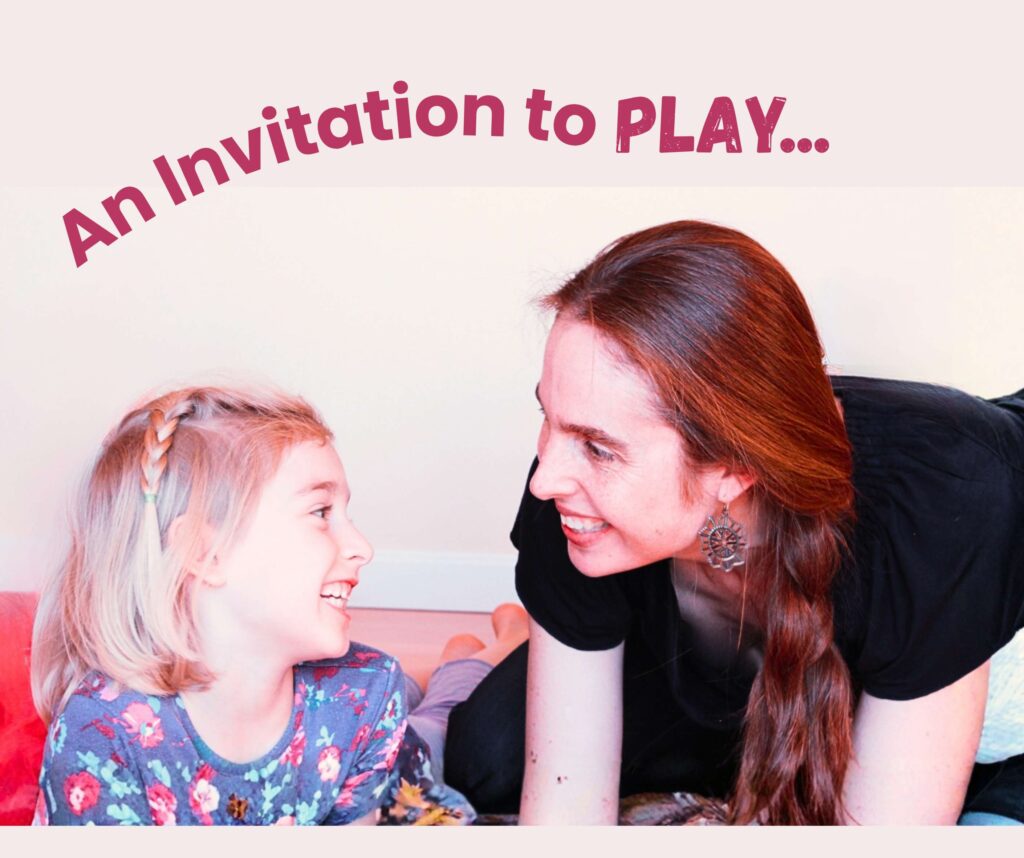
“The route back to optimal mental health may be through aspects of play.” Dr Stuart Brown
play /plā/
The word play refers to engaging in activity for enjoyment and recreation rather than for a serious or practical purpose.
I can guess what you might be thinking: “I don’t have time to play. I have too much to do. I wouldn’t even know where to start. Besides… this sounds like a waste of time.”
I understand. I used to think this too.
I grew up in a family facing enormous challenges. When I was fourteen, my mother suffered a severe brain injury and could no longer walk or care for herself. Later, she lost her speech too. Shortly after, my brother developed a serious mental health condition.
I had to grow up quickly. Play didn’t simply feel unimportant—it felt irresponsible. With everything my family was facing, being serious seemed like the only loving response.
But later, as life has its incredible ways, I had the chance to develop the very skill I needed most—playfulness. In 2004, as I began working with children on the autism spectrum, I quickly discovered that my seriousness couldn’t reach them. They responded, engaged and learned way more from the people who were joyful, and playful. I loved my work and I truly wanted to help the children. So I had to learn something that didn’t come naturally anymore. At almost thirty years old, I re-learned how to play again.
There was no faking it. This had to be the genuine type of joy, that had me on the floor, belly laughing. Autistic children know when we are not authentic. They invited me to rediscover a part of myself that I had left behind many years before.
The more I laughed, the less overwhelmed I felt. The more playful I became, the more clearly I could think. I found myself becoming more creative, solving problems more easily, worrying less, and being less tired. I was healing years of fight or flight, Stress Mode. I discovered that one of the most productive things I could do was the internal work of cultivating joy again—even while life remained difficult.
I came to understand something that has shaped my work ever since:
Joy and play are not distractions from healing. They are an essential part of the healing.
As little by little, I became less guarded, more playful, and more willing to be silly. Something remarkable happened. The children became more engaged. Their attention grew. Their language developed. They became more flexible and willing to participate.
And as I grew… They grew with me. This is when I understood about co-regulation in my core.
Many parents caring for children with autism, ADHD, anxiety, developmental delays, PANS/PANDAS, or other challenges eventually stop playing too. They become so devoted to helping their family that life slowly becomes filled with appointments, therapies, research, difficult decisions, and endless responsibilities. Perhaps, you experienced this too – without realizing it, seriousness became our permanent companion. This can harden us, and eventually paralyze us…
I want to invite you to consider that playfulness can become your new companion, and can be one of the most productive mindsets you can cultivate.
Creating joy and playfulness—even in the midst of life’s greatest challenges—is some of the most important internal work we can do. Research, therapies, nutrition, educational strategies, and medical care all have an important place. I have dedicated my career to many of these approaches. But none of them can replace the healing power of genuine human connection, laughter, joy, and play.
Perhaps you are now thinking, “Camila, I understand what you’re saying… but I’m exhausted. I’m worried. I haven’t slept well in years. My child needs me every minute of the day. How am I supposed to feel playful?”
From my experience, the answer is that we don’t begin by trying to force ourselves to be playful. We begin by creating a little more ease within ourselves. We let go a bit more. We judge ourselves and our situation a bit less. We pause and ask ourselves: “How can I do this with joy, versus fear or resentment?” “How can I have a sense of humor right now?”
This becomes a practice. We start small. And like every practice, it becomes stronger the more we return to it. Without pressure…
Some days, joy may look like dancing in the kitchen. Singing out of tune. Going for a walk. Telling a joke. Making silly faces. Having a picnic outside because the house is too messy and you don’t feel like cleaning. Hugging your child on the couch a little longer… It might also involve crying, when we need to, so we can let that go instead of stuffing it. Being compassionate towards ourselves and our loved ones.
Then you could ask: what makes me laugh? What makes my child laugh?
Joy is not something we wait to experience once life becomes easier. It is how we find our way through the hardest seasons. And sometimes, the deepest healing begins with play.
If you need help rediscovering how to create more playful moments in your life – please send me an email, and I will help you.
I deeply appreciate all of you.
Sending you much love and huge hugs,
Camila

What if your child has Pandas, Aggression, irritability, and along with that he is going through pre puberty?
Dear Sharlot,
For a teenager who is struggling with Pandas and aggression, I would strongly suggest using the keto version of the GAPS diet, combined with detox protocols. Aggression is often a sign of severe dysbiosis and high toxic load (many of the toxins possibly coming from pathogenic over-growth, not only strep, but others too). I’ve seen remarkable results when families follow a gut-brain health and detox protocol for children and adults with Pandas. I truly hope things get better for your whole family.
Best,
Camila