We all have learned at some point, early on, that our lives are full of boundaries and rules that we need to follow — not entering a stranger’s house, staying dressed while at a restaurant, paying for our groceries, driving within the speed limit, doing what our bosses ask us to do, and the list goes on. Boundaries exist to help keep us safe and create a more peaceful environment for everyone involved.
Sooner or later, our children will also learn that there are rules and boundaries they need to follow in order to live peacefully as part of their family and community.
Parents sometimes hesitate to set clear and consistent boundaries with their kids, either because they themselves had too strict rules growing up, or because they feel sorry for their child who is already sensitive and struggling in some way.
As parents, we obviously want the best for our children. We want to make their lives easier. But allowing them to get everything they want or to rule the house will not make their lives easier. It will create the exact opposite.
What Happens When Boundaries Are Blurry
When boundaries are not present or they become inconsistent, your child does not know what to expect. If mom allows playing with her phone, but dad doesn’t. If grandma allows candy, but mom doesn’t. A child begins testing limits in an attempt to understand what is predictable, reliable, and safe — not because they are being defiant, but because their nervous system searches for patterns it can trust.
And here is something worth noting: blurry boundaries create stress not only for the child, but for the adults around them too. Parents have to be constantly monitoring their child, and may resent their partner’s approach to these situations.
Does this sound familiar? There is no way you and your partner will instantly agree on every boundary. Most likely, you will need several honest conversations before you are on the same page — and that’s what I suggest.
What a Boundary Actually Looks Like in Practice
Setting a boundary doesn’t have to be a confrontation. It can sound like this:
Your twelve-year-old wants to watch videos at 9 pm, when typically, the Wi-Fi is off and you want them to go to sleep. They start shouting and protesting. Instead of negotiating, you calmly unplug and remove the router. Without over-explaining, you say: “Wi-Fi turns off at 9 pm so your body can get the sleep you need and you can enjoy tomorrow. I’m treating you with respect. I ask you to treat me with kindness as well.” Parents stay united, consistent, and support each other in this decision. You don’t waver. You follow through. You stay loving and you stay firm.
The child may protest. But over time, the consistency of that response is what builds trust. They learn: this adult loves me, they mean what they say, and it’s for my best interest.
Some Things to Consider When Setting Boundaries
1. Your child will learn this sooner or later. No one gets everything they want in life. It is easier — and kinder — to help them with this while they are still young.
2. Consistency is absolutely key. Parents and caregivers need to communicate, get on the same page, and present a united front — not for the sake of control, but because consistency is the very thing that makes boundaries feel safe rather than arbitrary.
3. Keep your boundaries to what really matters — physical safety, wellbeing, and the reasonable functioning of your family life. The fewer the boundaries, the more effective they are.
4. Explain to your child how this boundary is intended to help them and the whole family.
Equally important: say yes generously. Give your child control where it’s reasonable and safe. It’s ok if they want to wear clothes that don’t match. It’s ok if they want to eat with their hands. It’s ok if they don’t want to brush their hair. It’s ok if they want to carry their favorite toys with them wherever they go… This is especially important for children whose nervous systems are often in Stress Mode.
When boundaries are unnecessary, excessive, or inconsistent, they often turn into power struggles that are super stressful for everyone involved.
If boundaries have been blurry in your household, start by creating a list of the non-negotiable, essential boundaries that would support your child’s wellbeing and your family’s daily life. Ask your partner to do the same. Then get together and have a few conversations to decide how to move forward. Be open and flexible during these conversations — in the end, you both want the same for your family: a harmonious home.
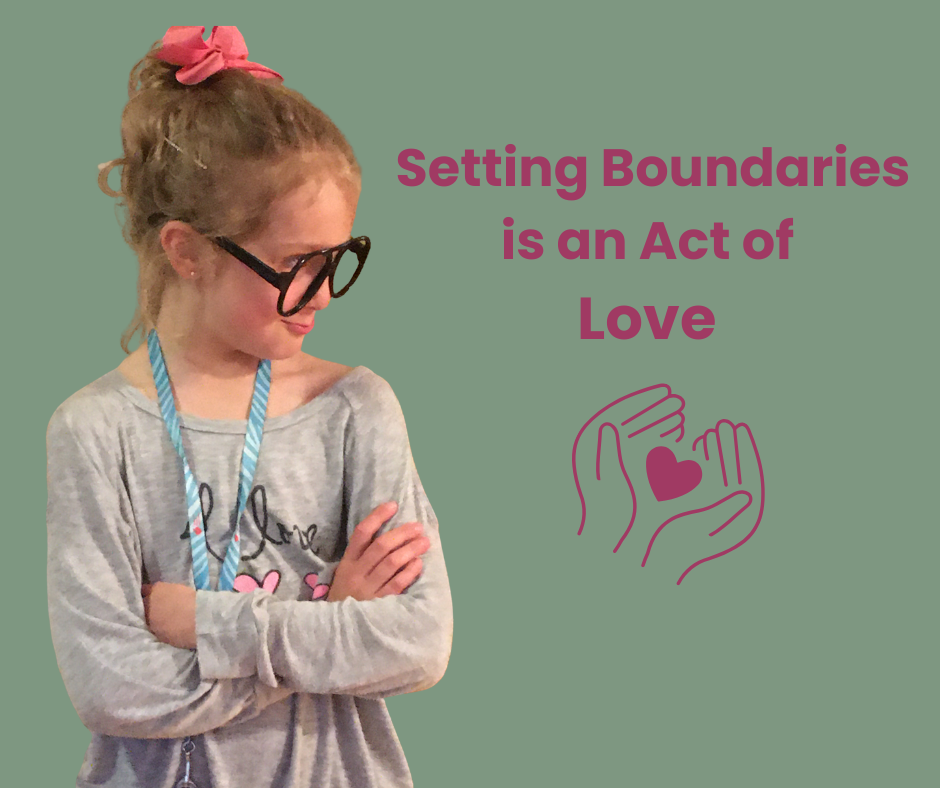
Remember! Setting non-negotiable, essential boundaries is an act of love and helps prepare your child for life.
Children feel safest when the adults around them are calm, clear, loving, and consistent. Boundaries, when offered from a place of connection and care, help create the predictability and safety that allow both children and families to thrive.