


Why Your Child Needs the Sun—Especially During the Colder Months
As the season changes, I am trying to get every bit of sunshine I can. As the days start getting shorter, my body craves the warmth and light of the sun. Maybe you, too, feel a little sad that summer has come to an end?
On summer weekends, after spending a few hours outdoors—walking up a mountain and then swimming in a spring-fed lake—I feel like I become Wonder Woman. Nothing hurts anymore, I sleep well, I am happy, and my brain becomes so clear.
In my practice over the years, I have also noticed a trend: kids seem healthier, happier, grow more, and learn more during the summer months when they spend more time outdoors. Have you noticed this, too, with your child?
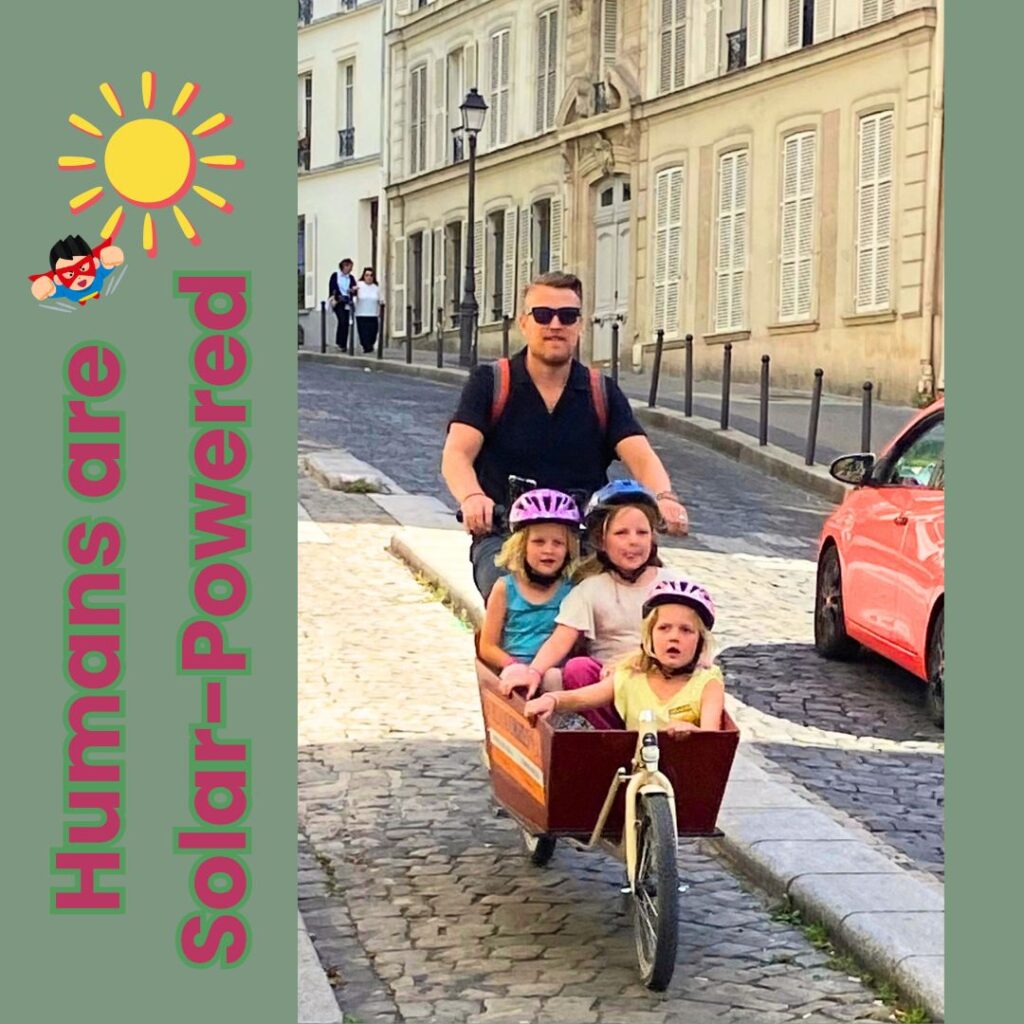
We are creatures of nature and creatures of sunlight. And this goes far beyond our need for vitamin D. Humans are truly solar-powered!
You may be thinking: Well… humans are powered by food, oxygen, water, love…
Yes, that’s true!
But what if food, water, oxygen, and even love were forms of stored light? And what if sunlight is the ultimate energy source for all life on Earth?
Nearly all biological energy on Earth ultimately traces back to sunlight. Photosynthetic organisms (plants) capture solar energy and convert it into chemical energy (the nutrients in the food we eat). That energy eventually supports non-photosynthetic organisms—including us.
Sunlight is the fundamental force that organizes, regulates, and sustains life on our planet.
Scientist Roeland van Wijk spent more than 40 years conducting academic research on the spontaneous emissions of light produced by living cells and tissues and their relationship to health. He discovered that healthy cells are able to store light (photons) and even emit ultra-weak light. He is the author of Light Shapes Life, an incredible book that explores this fascinating subject.
Sunlight has many roles in human health that go far beyond vitamin D. Sunlight regulates humans’:
 Circadian rhythm, including our sleep-wake cycles
Metabolism (our energy production)
Hormones and neurotransmitters such as melatonin and serotonin, which affect our mood and behavior
Immune functions
and a whole lot more!
Aren’t these the same functions we are trying to improve for our children on the autism spectrum?
My mentor, Dr. Natasha Campbell-McBride (the creator of the GAPS nutritional protocol), says: “People who are healing should spend at least 4 hours a day outdoors. And those who are in good health should spend between 1 and 2 hours a day.” When I have time to follow these recommendations, I feel my best.
I see something similar with many of the families I work with. The children who, in addition to following the nutritional protocol, spend more time in nature and in the sun, and less time indoors, often experience more sustained emotional and physical well-being.
A Little Boy Who Spent His Summer Outside
In May, I started working with Dave’s family—a 3½-year-old boy on the autism spectrum.
Dave was underweight, had low muscle tone, and had significant challenges with his motor skills. He drooled almost constantly. He had never run and was wobbly when walking. He hated swings.
Dave’s parents gradually started implementing the GAPS nutritional protocol while at the same time beginning to spend much more time outdoors. Instead of using screens and devices to distract their son, they had all their meals on the porch, played in the yard, and even did his physical therapy outside.
By September, this little boy was starting to run and chase his older sister!
He became more engaged and attentive. He gained weight, started climbing on different structures, and now he loves swings.
All of his therapists—PT, OT, and even his speech therapist—commented on how much he had grown and developed throughout the summer. And his mom recently told me that Dave is now sleeping through the night.
The way this family spent their summer created a very different environment for this little boy to grow, connect, move, and learn.
But What If We’re Too Busy?
Busy parents might not have the time to be outdoors with their kids for four hours every day. That’s okay. Start with what you can…
Here are some ideas you could try:
Weather permitting, eat meals outdoors—even on a balcony if you don’t have a yard.
Walk or bike to places instead of driving whenever possible.
Meet friends outdoors—go for walks or hikes, swim in nature, kayak, canoe, have a picnic at the park, go foraging, join a community garden, or attend an outdoor theater.
Grow a vegetable garden or raise a few chickens.
Do outdoor sports—soccer, running, rock climbing, hiking…
If your child is ready for school, consider an outdoor school, such as a Forest School, or a nature-rich school such as Waldorf.
Consider living somewhere with a safe, fenced-in yard where your children can spend plenty of time outdoors.
It’s especially important to get outside during the cooler months, when the sun is lower in the sky and we have fewer hours of it every day, making it harder for our bodies to absorb it.
Here Is My Invitation to You
As the weather starts getting colder here in the Northern Hemisphere, remember not to get cooped up indoors. Instead of going to Target or the mall, make time to be in nature.
Create an intention every day to get outside. Let your children experience natural light, fresh air, movement, and the changing seasons.
Let sunlight reach as much skin as is comfortable.
Indoor infrared light devices, which some of you might be using, offer only a small slice of the full spectrum of light available from the sun.
Sunshine is free, and it’s powerful!
I’d love to hear how your family catches the sun during the cooler seasons 
Happy Fall—or Spring—everyone!!
References:
Sunlight directly triggers and accelerates the production of serotonin in the human brain, which is why it is intimately linked to mood regulation, alertness, and mental well-being. When you step into bright light, a rapid chain reaction occurs between your eyes, your brain, and your hormonal systems.
Read more about this in this study from The Lancet: Lambert, G. W., Reid, C., Kaye, D. M., Jennings, G. L., & Esler, M. D. (2002). Effect of sunlight and season on serotonin turnover in the brain. The Lancet, 360(9348), 1840–1842.
